
QUESTION6.com
The world we live in
9 - The human brain
Before we pretend to dominate the universe, we should keep in mind that modern humans are 98.8 % genetically similar to chimpanzees, 75% genetically similar to chickens and 60% genetically similar to banana trees.
To make an evaluation of our thinking, we compare it with the thinking of other animals. That’s cheating. We should compare the development of our brain with the development of our own body. That would make us very humble.
A good place to start would be the way Mother Nature implemented thinking on planet Earth.

Let’s start with the octopus.
An octopus has 9 brains. There is one in the center of its body and one inside each of its 8 arms. It is colorblind and sees the world in shades of grey. It can recognize a human face and remember it. Each arm can taste, touch, and think for itself. An octopus can learn by watching the mistakes made by another octopus. It has 3 hearts. This is a warning to humans. You need a balance between thinking and feelings. The octopus recommends 3 hearts for 9 brains.
It is also capable of tender loving care. For 7 months, the female octopus takes care of her eggs and dies after the last one has hatched.
For the time being, humans have one heart and one brain that could be divided into two. The octopus may be ahead of us in their evolution. Anyway, there is a strong connection between heart and brain.
We search with the brain
And find with the heart
George Sand
After the octopus, let’s have a look at the birds. Some birds have a brain divided into two and can switch between them. They can use one half while the other half gets some rest. They can keep flying for months without landing. They can also detect magnetic fields.
-
Our answer to the slime challenge could be:
-
“Slimes don’t talk to each other. They don’t know about writing. They don’t know about music. They ignore everything that is not part of their domain of expertise. They are experts in a certain domain, but their domain is limited. Humans also could be experts in a limited domain. Every plant and every animal could fill a slot in nature’s unlimited domains of expertise. Why does nature make flowers grow on top of a mountain where nobody can see them? The answer could be: Because “there was a place for a little domain of possibilities on top of that mountain”. Slime molds use one domain of possibilities and humans use another.
-

On the other hand we have slime molds. No head, no heart, no brain and very slow movements. That does not prevent the slime mold from solving problems faster than powerful computers.
That shows the multiple connections possible between life, sense organs, thinking, movements of the body, beating of the heart, memory and tender loving care.
The human brain
Human thinking is one of the many possible implementations of thinking in the world. The human brain is already divided into two halves. With a little help from human evolution, we may be able, someday, to alternate between one half of the human brain and the other.
Humans are somewhere between two extremes. We have one brain divided into two halves. We also have grey matter along some nerves and 86 billion neurons. In the past 200 years, we made locomotives, TV, computers, planes, satellites, vaccines, atomic bombs, MRI, bulldozers, dams, viaducts, and much more. This is an accomplishment. We can be proud of it, until we compare it with our body that completes about 500 trillion faultless copies of hemoglobin, a protein having 10000 atoms in 574 amino acids. Imagine what we could do with a brain as sophisticated as our body!
Can we rely on human thinking?
The scientists are the first ones to say that our thinking is not dependable. They want everything to be confirmed by experiments. They demand the approval of Mother Nature for everything. Today, we want A.I. to amplify human thinking. Is that reasonable? The robots that we are going to make will come from human thinking. Are you sure that this is what we want to amplify? It could be good. It could also be really bad. Can we be sure that we don’t need Mother Nature’s approval anymore?
How can we be sure that we don’t need Mother Nature’s approval anymore?
Let's test the human brian
No mathematics. This is a simple question about family relationships! There should not be any problem! We can find the answer (mother-in-law), but it takes time.
“If Marie’s daughter has a son, what is the relationshipbetween Marie and the father of this son?”
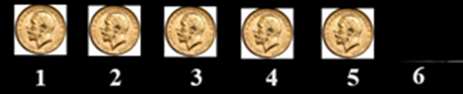
Here is another test of the human brain:•
We take a series of coins and put them in alignment and number them 1, 2, 3, 4… all heads up.
•We flip the coins 2, 4, 6… and all the multiples of 2.
•We Flip the coins 3, 6, 9, 12… and all the multiples of 3.
Which coins are still head up?
No need for complicated calculations. Some simple reasoning should do. There are two ways a coin can still be head up -)
We made computers. Could that be used as proof of superior thinking? Maybe not! Computers are made of the association of millions of simple ideas coming from millions of different people. That does not mean that the human brain improved the day we started making computers. It only shows that we need many people to put together many simple ideas.
Our use of computers follows the general direction of human evolution. We started by making tools to go hunting. Those tools were simple objects. The next step was to make machines. That requires the use of many objects. With computers, we keep moving from the material world to the non-physical world. With A.I. we are taking one more step in the same direction. Humans are distancing themselves from the material world. Where is that leading us? The development of the soul?
How can we explain this enormous discrepancy between our mind and our body?
One possible explanation could come from our history. Animals know how they should react to danger. Birds fly away - Zebras run - Fish swim. When man perceives a danger, he may hesitate between different possibilities. Should he hide? Run away? Call for help? Throw stones? Climb a tree? Man introduces thinking between being aware of the danger and his reaction. That takes time! A fraction of a second could make the difference between survival and becoming a meal. The more you think, the lower your chances of survival. Eliminating the best thinkers for millions of years before they even had a chance to reproduce lowered the IQ of the general population. We are the survivors because we are the dumb ones. The Homo sapiens survived because of their limited thinking -)
The Homo sapiens survived 300 000 years
because of their limited thinking.
We thought that mathematics could help. It is a way to avoid the need for reasoning. At the end of mathematical reasoning there is a formula. If you know the formula, you don’t need the reasoning. To get the surface of a rectangle you only have to remember that it is a multiplication. Nobody will ask you why. We use Mathematics to avoid reasoning. Of course, somebody had to find the formula. We called him a genius and put his name in the dictionary. This is our way to avoid bruising our ego.
